
Applications
for
Linear
Lights
Light is what enables humans to perceive spaces. Light can influence the perception of architecture. It expands and accentuates spaces, creates connections, and delineates areas.
Cove lighting
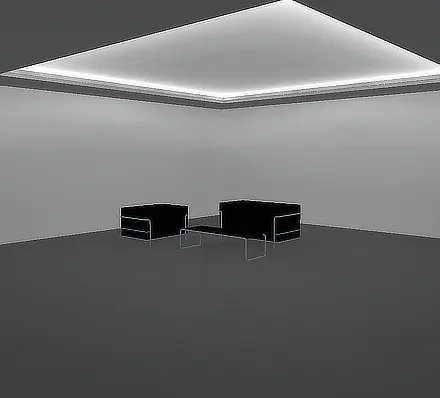
Ceiling cove with inward-facing light direction
Effect: Cove lighting brightens the ceiling and simultaneously gives the entire room a sense of spaciousness. The room appears taller, and the spatial zones are clearly defined. This type of cove lighting creates a balanced, soft, and shadow-free ambient light.
Note: Homogeneous illumination without light-dark areas on a reflective ceiling surface is achieved by using LED strips with high uniformity combined with a white or frosted cover and/or by deeply recessing the fixture. Use a high-output LED series for general lighting.
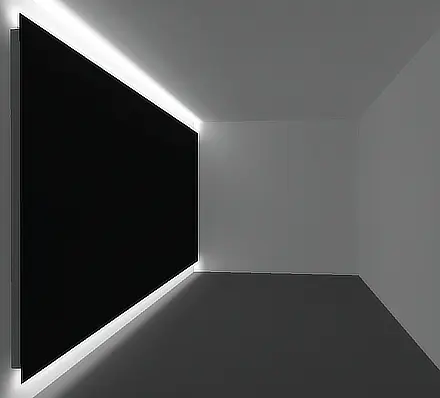
Backlighting of a projecting wall surface
Effect: High-contrast separation of the wall surface from the floor and ceiling.
Note: Homogeneous illumination without light-dark areas on a reflective wall surface is achieved by using LED lines with high uniformity combined with a white or frosted cover and/or by deeply recessed installation.
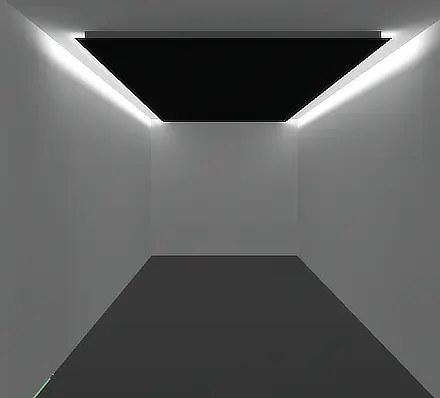
Ceiling cove with light directed outwards
Effect: The cove lighting illuminates the entire ceiling frieze, while the recessed inner ceiling section remains dark. The room's proportions are accentuated with light, making the room appear larger.
Note: Homogeneous illumination without light-dark areas on a reflective ceiling surface is achieved by using LED lines with high uniformity combined with a white or frosted cover and/or by deeply recessed installation.
Base lighting
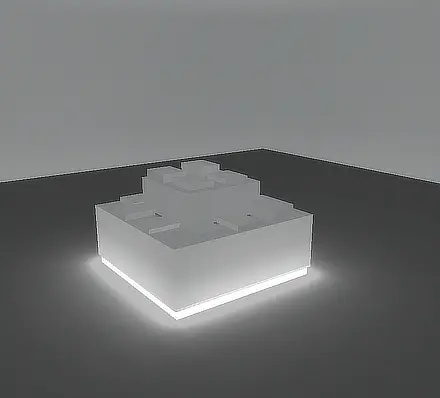
Homogeneous base lighting
Effect: Island of light
Note: Homogeneous illumination without light-dark areas over a reflective floor surface is achieved by using LED lines with high uniformity combined with a white or frosted cover and/or by deeply recessed installation.
pendant light
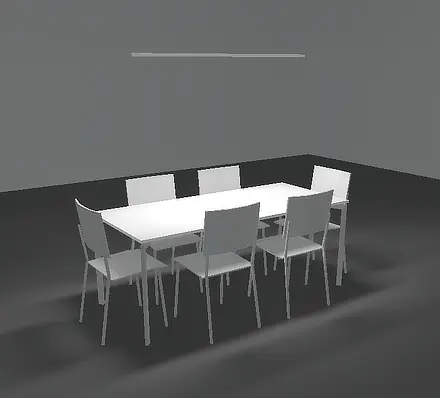
Suspended LED line
Effect: Table-related lighting.
Note: Ensure sufficient lighting. If the tabletop is smooth, distracting reflections may occur; using a white cover will prevent this.
Shelf and table display case lighting
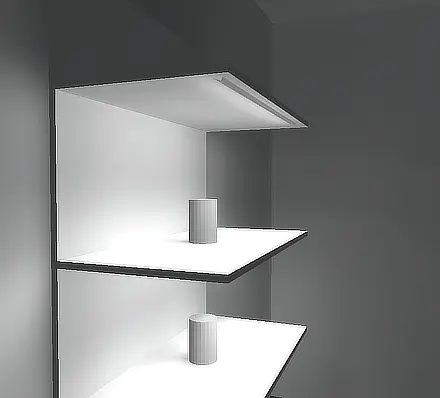
Front lighting
Effect: Highest brightness zone at the front edge of the compartment and very uniform illumination of the recessed object.
Note: For high-quality exhibits, use LEDs with high color rendering.
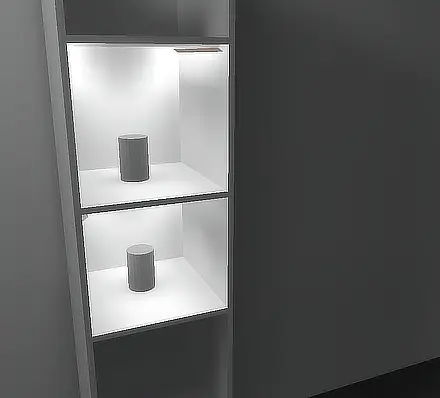
Inclined light illumination on both sides
Effect: Maximum brightness zones on both sides. Shadow-free illumination of the object.
Note: For high-quality exhibits, use LEDs with high color rendering.
Direct lighting
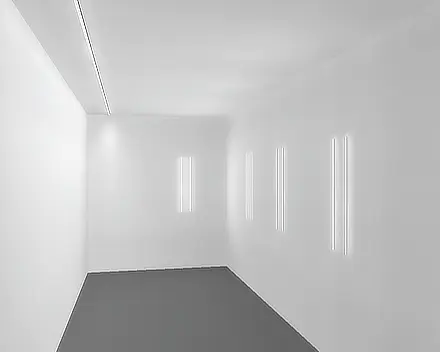
Built-in/add-on line for direct lighting
Effect: The light is directed into the room and onto the functional areas or to places where it is needed. A long, visible line can, for example, serve as a light guide, while short lines can also be decorative elements.
Note: Various lenses/covers are available depending on your needs. However, direct light creates shadows, can cause glare, and reflects light.
Stair lighting
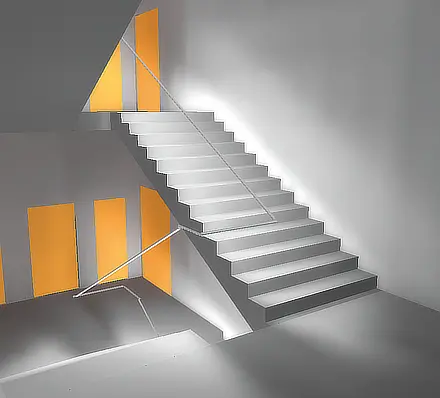
Handrail lighting
Effect: Homogeneous, guiding illumination.
Note: In principle, all LED lights are suitable for integration into emergency lighting systems.
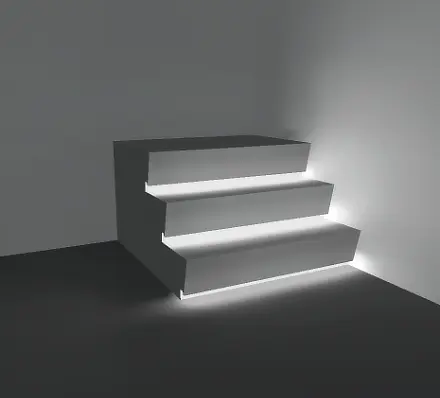
Step lighting
Effect: Strong emphasis on the staircase.
Note: To achieve homogeneous illumination over a reflective floor surface, we recommend using LED strips with high uniformity. Combining them with a white or frosted cover and/or deeply recessed installation completes the effect.